Blog
How an NGO Supports School Development: What a Partnership With School To Lead Looks Like
In short
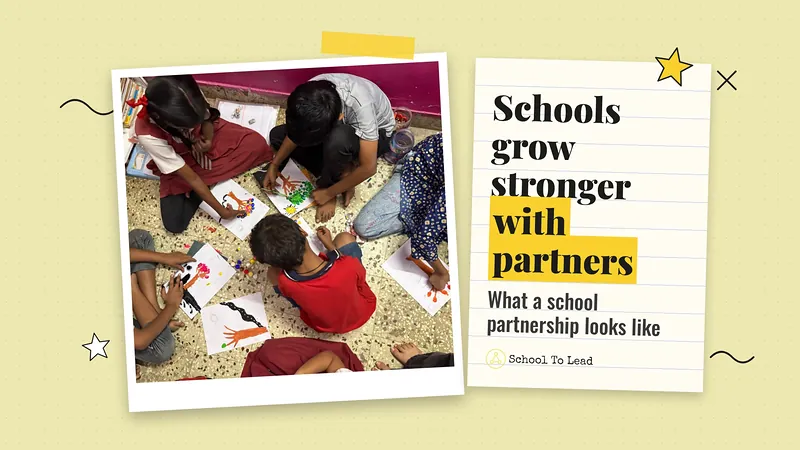
School development is about people as much as buildings: the learners, their teachers and their parents.
School To Lead works with all three groups in a partner school at the same time, so each group backs up the others.
Every partnership is shaped around the school's own needs, not a fixed package.
When people hear "school development", they often think of buildings. New classrooms, toilets, a library or a computer lab.
Those matter. But a school with good buildings can still struggle to help its students learn.
Learning improves when the people around the student improve. That means the teachers who teach them every day, the parents who support them at home, and the students themselves.
Learning improves when the people around the student improve.
That is the idea behind how School To Lead Foundation, an education NGO in Ahmedabad, works with schools. This post explains what that looks like in practice.
Starting with the learner
Our work keeps the student, or as we call them, the learner, at the centre. We call this student leadership.
It means students who learn to take charge of their own learning and help other students learn too. When one student mentors, coaches or helps another to learn, a system starts to grow that works for learners and by learners.
Not every child sees leadership the way business or political leaders are shown. So we help students find the leader in themselves and practise leadership in their own way.
The three groups we work with
Learners
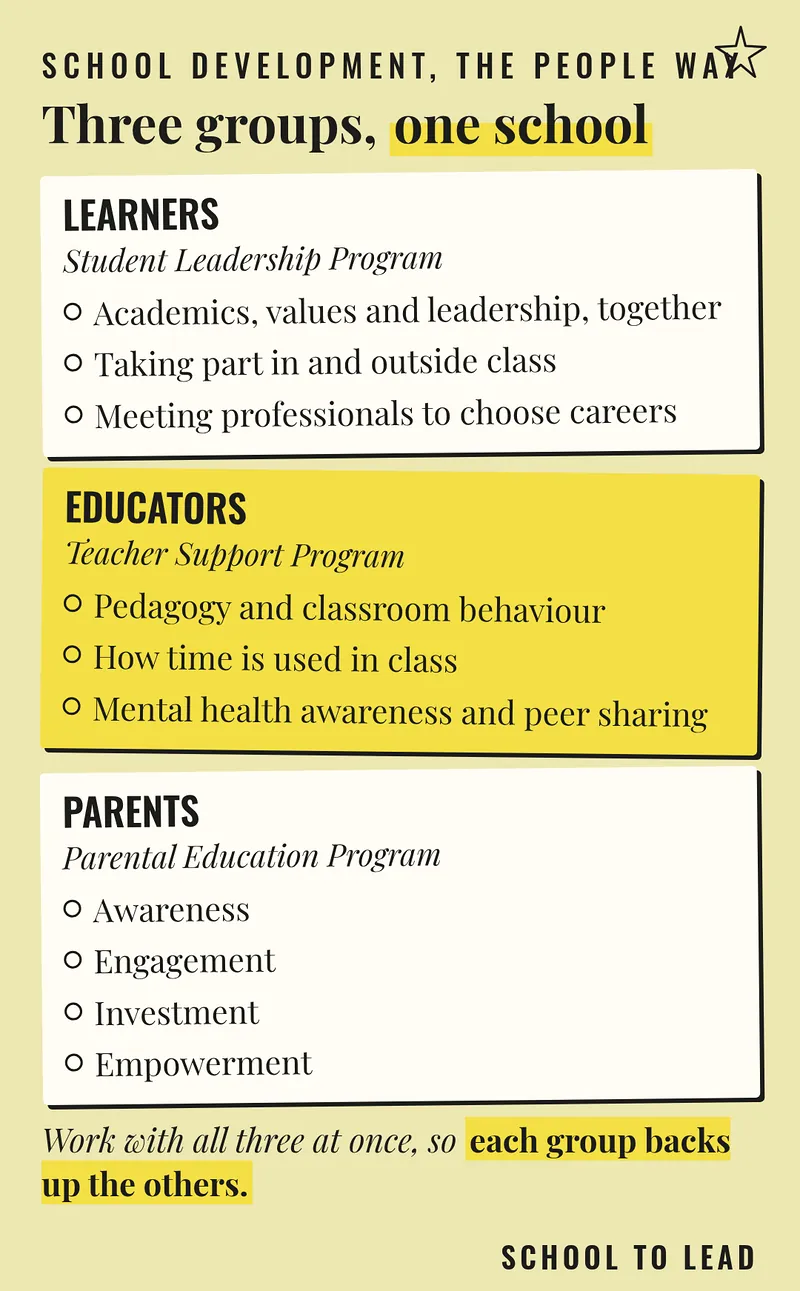
Through our Student Leadership Program, we work with students on three things together: academics, values and leadership.
We provide academic support and help students take part actively in and outside the classroom. Workshops and seminars introduce them to professionals, so they can make informed choices about careers.
Educators
Through our Teacher Support Program, we work with teachers from schools and other education organisations on their professional and personal skills. That includes pedagogy, classroom behaviour management and how time is used in class.
We do not run one programme for everyone. Support comes weekly, monthly or yearly, and is built for each school and each teacher.
Teaching is a demanding job, so we also run support around mental health awareness. Teachers meet to share what happens in their classrooms and find solidarity in the work.
Parents
Through our Parental Education Program, we help parents support their child's learning and growth. We work with parents in four stages: awareness, engagement, investment and empowerment.
A parent's part does not end at buying books and checking homework. It begins there. Regular sessions build a sense of responsibility that carries into the home, and they often build trust between parents and teachers too.
Why all three, together
Students spend about two thirds of the day at home or in their community and one third at school. If only the school changes, progress fades at the school gate.
If only parents change, the classroom does not follow. Working with learners, educators and parents at the same time means each group backs up the others.
This is what our School Development Program does. It brings regular work with all three groups in a partner school, aimed at better learning outcomes for the whole school.
Parents and teachers on the same side
Parent teacher meetings often stay limited to complaints. We encourage a layered model for these meetings, so parents and teachers build trust and talk regularly about the child.
Where parent and teacher relationships are a recurring problem, we introduce simple conflict resolution techniques to both sides.
Support that grows with the school
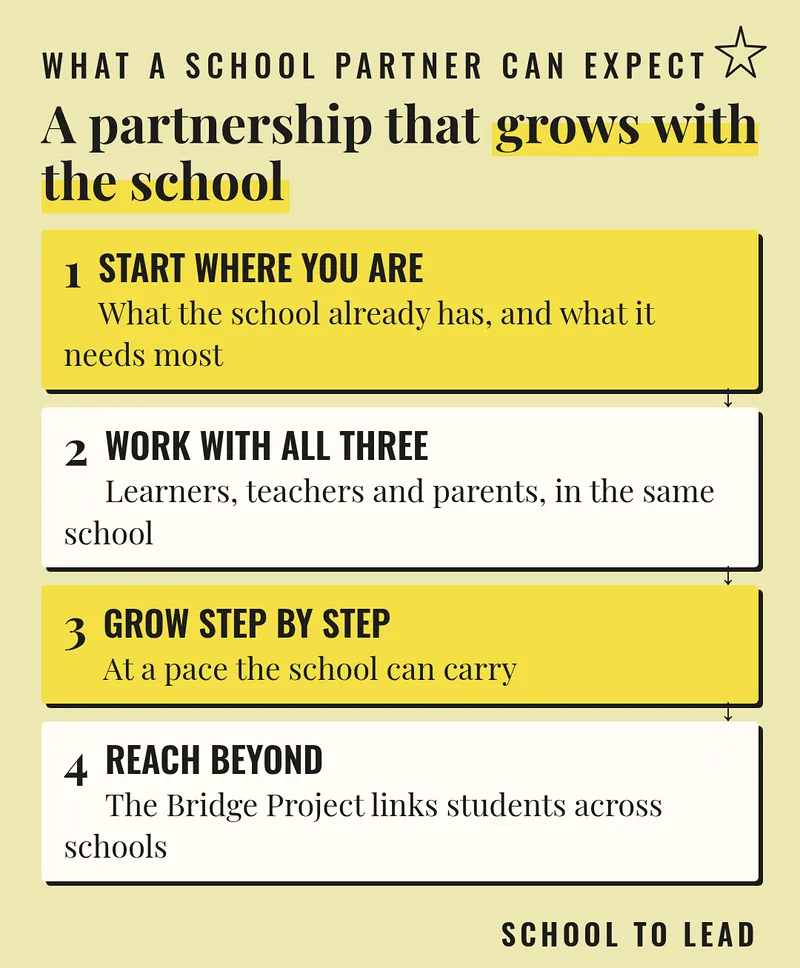
We start with what the school already has and what it needs most. From there, the work with learners, teachers and parents grows step by step, at a pace the school can carry.
Values in every lesson
Values and mindsets are not meant to live only in a separate class. We help teachers bring them into every lesson, whatever the subject, so students can put them into practice.
Beyond a single school
Some of our work connects schools. The Bridge Project brings together students from different schools and different backgrounds to support each other.
It builds values such as gratitude, empathy and humility along the way. You can read about all our programmes on the projects page.
What a school partner can expect
A partnership shaped around the school's own needs, not a fixed package.
Work with students, teachers and parents, not one group alone.
An approach grounded in our values: collaboration, perseverance and equity.
Collaboration sits at the heart of this. We work with schools, NGOs and individuals in education whose vision lines up with ours, so that each one's work goes further than it would alone. For a wider view of the sector, see our post on what an education NGO does.
Frequently asked questions
What does an NGO do in school development?
It works with the people in a school as well as the school itself. At School To Lead, that means regular work with learners, educators and parents in the same partner school.
Who can partner with School To Lead?
Schools, NGOs and education organisations whose vision lines up with ours. Organisations looking for teacher training and educator support are welcome too.
Is every partnership the same?
No. Each partnership is shaped around the school's own needs, and support for teachers is built for each school and each educator.
If you would like to work with us, you can partner with us or write to reach@schooltolead.org.